Tag: performance

  • ct dug + owen sake

    ct dug + owen sake

    Owen will be performing for you. ct will be joining him to make sure it’s an unforgettable experience for you and your friends (if you’d like).

    This time, we’d like to offer you an experience in which various instruments are mixed and modulated using synthesis and effects. It’s a sort of pre-programmed concert that could take different turns as it unfolds.

  • Brian Liu and Franziska Ullrich

    Brian Liu and Franziska Ullrich

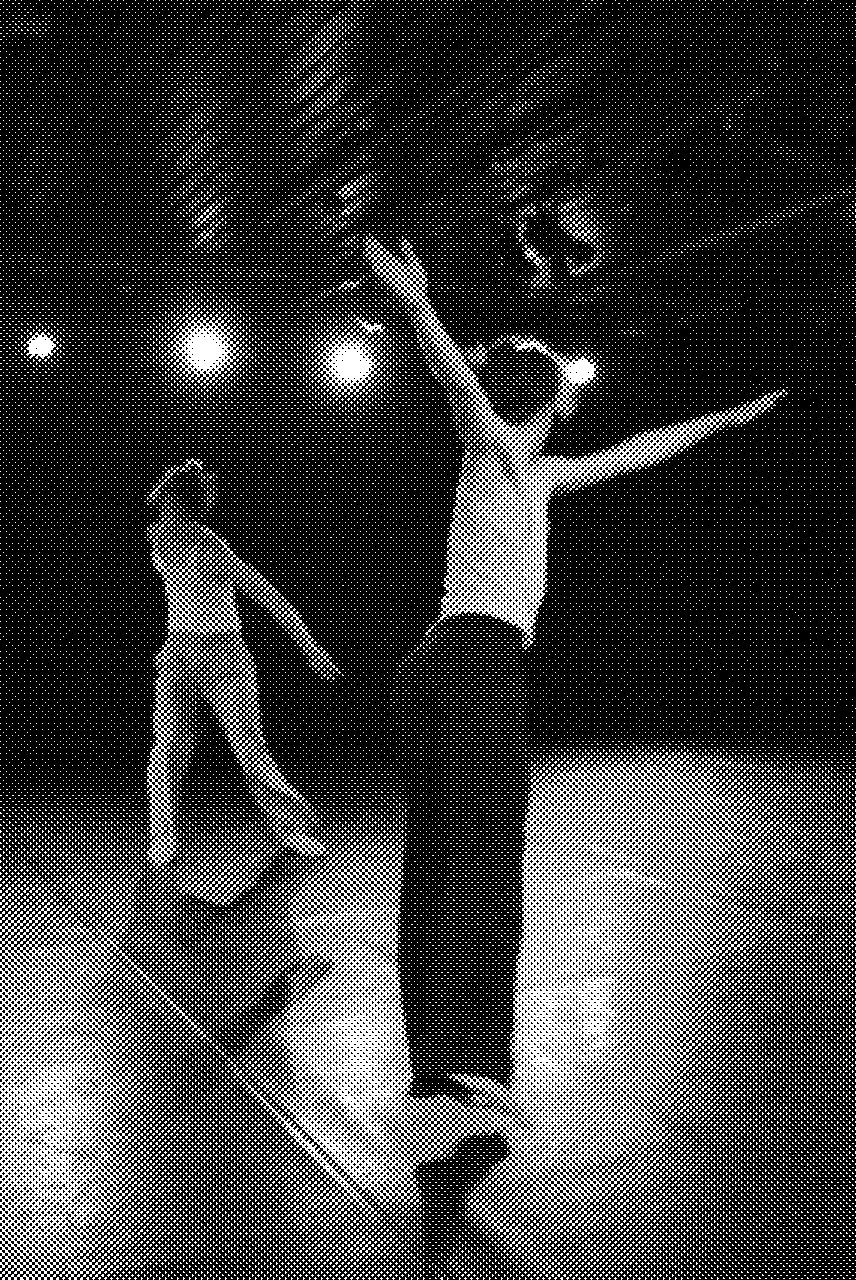
    Brian and Franziska both completed their training as contemporary stage dancers at Sozo Visions in Motion in Kassel. Both bring with them experience from many years of musical practice, studies in the visual arts, and skills in urban and acrobatic dance as well as physical theater. In 2025, they began their collaborative movement research and regularly present improvised duets at open stages or exhibitions.

    What was distant becomes intimately close. What lies at the core, we reveal to the outside world. Equipped with microphones and pickups, skin and hair become the resonating bodies of the dance performance.

  • Mitsitron

    Mitsitron

    Mitsitron is a sound artist, musician, and program curator. She explores collective ways of making one’s voice heard—both as a personal and a political process. By employing queer methods in sound and performance, she seeks to break through binary thinking and move toward multifaceted experiments. This gives rise to moments that create space for listening and shared reflection. In their solo sets, they manipulate their guitar and vocals live using creative coding. They are active in Rotterdam’s experimental and improvised music scene and perform at venues such as Worm, Roodkapje, Varia, Time is the New Space, and iii in The Hague. They have performed twice at the Art Meets Radical Openness Festival in Linz, in 2024 and 2026. They have spoken about their work at Panteion University in Athens, at Radio Operator in Rotterdam, at Creative Coding Utrecht, and at the REMIX Festival in Hilversum. They are part of the “Platform for Extratonality,” where they organize workshops and performance evenings centered on non-dominant sound production. They are a member of the Varia collective, which explores cultural work in contrast to Big Tech. In 2026, they will serve as program curators for MaMA Rotterdam and curate an exhibition on grief from social and political perspectives. They have a background in architecture, jazz guitar, and experimental publishing.


    Lament for the weird is a performance for mourning in public. A space for processing the destruction caused by normativity. This lament is Mitsitron’s effort to reconnect with sonic traditions of their roots that they first understood as vulgar through their flat modernised schooling. Their music lovingly glitches “greekness” which as every national formation excludes queers and ethinically others. The lament for the weird is everchanging: it is as a collage of a live processed electric guitar, expanded vocals, the Plug Data visual coding system and greek modes that touch the heart of those exiled from them.

  • Jan Grebenstein

    Jan Grebenstein

    Jan Grebenstein is a producer, DJ, and artist from Kassel. After years as a drummer and guitarist in various bands, he made his solo debut in 2014 with a four-track EP on Downwards Records, the label run by Regis (Karl O’Connor)—a label that has stood for uncompromising techno and industrial aesthetics since the 1990s. Under the name Grebenstein, he developed a minimalist, physical sound that blends techno, industrial, and experimental electronic music. This was followed by releases on the experimental labels Horo—including the EP “Gloss” (2017)—and Osiris Music UK, which further refined his signature style: sparse, economical production and tension created through omission. In 2021, a second alias, GEZA, followed: The debut “Dialoge” on Avian emerged as a reaction to a love-hate relationship with techno—produced under self-imposed restrictions: a maximum of five minutes of recording time, no more than four tracks per piece, and a synthesizer with an 8-step sequencer. The use of limitation as a method runs through both projects as a defining approach. Grebenstein has performed live and as a DJ on major stages of the experimental club music scene: at the CTM Festival in Berlin, at the Säule in Berghain, and at Tresor Berlin—most recently in 2024 at “Tresor meets Downwards” alongside Regis and Ancient Methods—as well as at the Lunchmeat Festival in Prague, at KHIDI in Tbilisi, and at the Electro-Mechanica Festival in St. Petersburg. In addition to his work in music, Grebenstein works as a designer at the creative agency Dorfmeyster, developing visual identities and communication concepts for, among other things, cultural and foundation projects. He does not view sound and image as separate disciplines, but rather as two forms of expression within the same practice.

    The performance combines my live set with sound-reactive visuals, which also form the basis of the Range Festival’s visual identity. The audience thus does not experience an illustration of music—they witness the festival’s identity taking shape. The concept stems from the intersection of my two practices, and in this performance, both roles converge: The festival’s visual system is not pre-programmed but is controlled in real time by sound—the frequencies, dynamics, and rhythm of the music directly influence the form, movement, and density of the graphics. Musically, the set ranges from minimalist techno to industrial and experimental electronic music—following the aesthetic of my previous releases: sparse, physical, and economical. This minimalism is reflected in the visuals: no decorative embellishments, but rather a strict system that comes to life under the influence of sound.
  • Felicity Mangan

    Felicity Mangan

    Felicity Mangan is an Australian sound artist and composer based in Berlin. In her sound works, she combines field recordings, synthesis, and electroacoustic composition techniques to create quasi-bioacoustic music. Her works have been presented in multichannel installations, live performances, site-specific contexts, and on various music albums.

    A live performance featuring electroacoustic sounds, in which field recordings and FM synthesis are combined to create quasi-bioacoustic music.

    felicitymangan.org

  • Maerie C. Fricke

    Maerie C. Fricke

    Maerie C. Fricke works with sound, materiality, and process-based sculptural installations. Drawing on her research, she develops intermedia works that explore material traces, technical infrastructures, and forms of transmission. She is currently exploring a partisan understanding of resistance through the appropriation of knowledge and investigating the history and materiality of radios as sites of communication, contact, and political agency. After spending an Erasmus year studying site-specific art at the University of Applied Arts Vienna, she transferred from the Kassel Art Academy to the Düsseldorf Art Academy to join Nina Canell’s class.

    per ardua ad astra (870 kHz) A message full of questions to the universe is broadcast via a homemade AM transmitter and received by analog radios. Enveloped in dust, interference, and electromagnetic noise, the signal is reflected in the Earth’s expanding radio bubble as a drifting archive, in which the broadcasts continue to resonate long after their voices have already faded away.

  • Spiders

    Spiders

    Spiders (they/them) is an electronics and game engineer as well as a little messy sfx angel. They build synthesizers, do drag, produce electronic sound works and internationally perform on stage since 2019.

    The Dolls Speak (working title): A history of trans-feminine vocals in electronic music. From the vocoder to voice training cassettes to pitch shifting and vocaloids. Formatted as a performance lecture.

  • Eeva Ojanperä

    Eeva Ojanperä

    is a media artist and filmmaker based in Kassel. She creates multimedia and interactive installations that bridge indoor and outdoor spaces, the past and the present, and nature and technology. Her multisensory works explore identity, loss, connection, and transformation—shaped by her history spanning Finland, Russia, and Germany. As a filmmaker and sound designer, she contributes to film and TV productions, curates festivals such as the Range Sound Festival, and is dedicated to educational outreach on topics related to sound, the environment, and nature.

    ROOMTONE examines silence as a condensed social state. The starting point is a practice from filmmaking: the recording of “roomtones”—one minute of apparent silence from each filming location, which remains invisible in post-production but conveys atmosphere. Transposed into public and semi-public spaces, these recordings capture places of waiting and thresholds: government offices, hallways, waiting rooms, and transition zones. These spaces are not empty—they are charged with tension, time pressure, and anticipation. Here, silence becomes a resonating chamber for collective states of mind. The fragments are mixed, layered, and set to a rhythm—a composition of unremarkable moments in which time seems to stretch. ROOMTONE makes audible what is otherwise muted: the tension in stillness, the political dimension of waiting, and the question of who silence belongs to—and upon whom it is imposed.

  • NØ-1 Lou Lévêque

    NØ-1 Lou Lévêque

    is a composer and sound researcher based in Brussel. In their practice, Lou moves between composition and experimentation, blending baroque, electronic and punk influences, combining writing, improvisation and raw energy. Lou grounds their music in a political and social reflection, seeking spaces of freedom where art becomes a means of resistance and transformation.

    Crumple Nest is born from chaos – from madness clawing at the edges of reason, where thinking becomes impossible, where one sinks; depression haunting so many trans lives, a shared fog – the raw pain of sex perverted by trauma, STDs as brutal reminders of bodily betrayal, and the suffocating weight of rape culture. Conceived from the bed’s cave, this crumpled nest as improvised refuge, the album is a balm crafted to survive together: everything nests there, transformed into enveloping, healing textures. These aren’t abstract horrors; it’s the raw flesh of my anarcho-communist, feminist, whore, and trans life fighting in a world that devours the vulnerable. The album forges a sonic refuge: breaths in anxiety attacks glitching into powerful noise, enveloping sounds recentering chaos into an impregnable fortress. Politically, it’s a cry against capitalism and its exploiters – those polluting our air, overexploiting workers, crushing bodies. Live shows channel this rage through noise, mimicking human biological rebellion fighting to survive. Crumple Nest distills this energy into glitching wheezes bursting into cathartic release, confronting systemic madness. Trans and militant project, it reclaims sound as collective weapon and intimate balm. Tracks crumple and unfold like anxious lungs: dense textures against isolation’s crush, airy expanses for fleeting safety. It’s music for crisis, fuck, fever – intimate electronics politicizing the personal. In a culture stifling screams, Crumple Nest amplifies them into collective embrace.

  • Saguaro

    Saguaro

    Saguaro (born in Cologne) lives in Kassel and works as a freelance artist in the fields of drawing, music, and film. His work reflects an interest in visual, written, and acoustic languages—as evidenced by his degree in English literature and philosophy—and how their abstraction shapes our reality.

    A typewriter, a guitar. The former is connected to a looper pedal via a contact microphone; as the keys are typed, a rhythm emerges. Then the second instrument comes into play, exploring the typed rhythms through improvisation.