Anja Kellner is a multifaceted artist whose interactive installations, kinetic works, and media art reflect on sociopolitical themes such as sustainability, gender equality, and the impact of the digital revolution on everyday life. The “Deja-Vú Tabula Rasa” series of works illustrates her ability to combine artistic visions with technological and social innovations. In installations such as “Auge um Auge” or “Forced Swing,” she uses sound to convey fragments of memory and resonant catastrophes. In developing “LiSe—the light sensor,” which opens up new possibilities for accessibility for the blind, she demonstrates her creative and technical expertise. With artistic sensitivity, she addresses environmental issues in the design of alternative “dye-sensitized solar cells.” Her artistic research feeds into projects such as “Power Plant,” a multimedia installation that generates CO₂-negative energy via microbial fuel cells. The perpetual motion machine serves as a positive, utopian narrative for overcoming the climate crisis. Her experience informs a visiting lectureship during the 2024–25 winter semester on the topics of the “Internet of Things” and “Sound Worlds” at the Kassel Art Academy. Likewise, her long-standing work with Hakon Hennig—an electronics developer and artist with a background in electrical engineering and photography—has complemented this perspective with his technical expertise. His contribution an Tarek Atoui’s project “Metastable Circuit 1” (documenta 13), as well as art installations such as “Gespräch unter vier Augen,” “Erraquisition,” and “ComfortClock,” demonstrate his ability to integrate technical systems into artistic contexts. Transparency and the revelation of technical components and circuitry characterize his artistic practice. Through the development of a vacuum chamber for electron diffraction and the design of an innovative circuit for his Polarskop, Hakon impressively demonstrates his profound and comprehensive understanding of complex systems. This complexity becomes aesthetically tangible in his kinetic works.
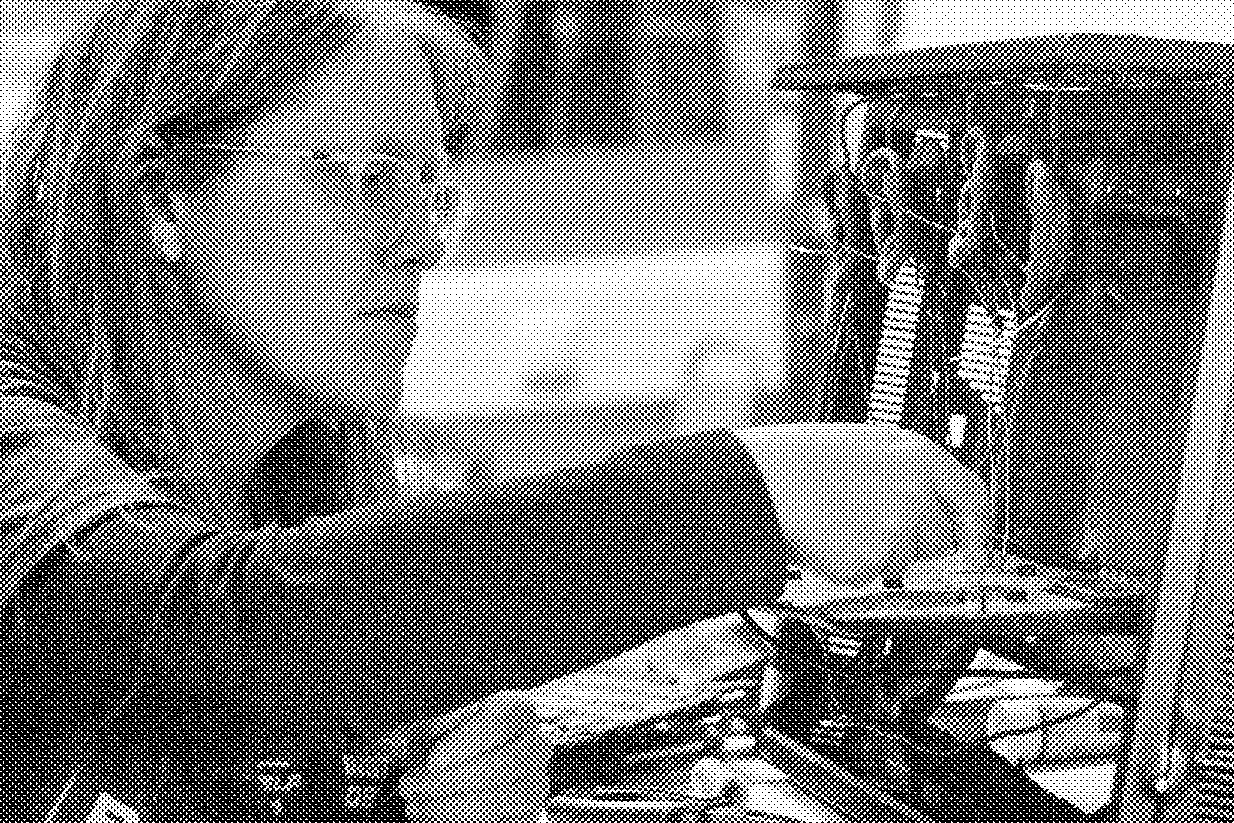
Magnetic Light Score The starting point of the project is the exploration of analog video technologies as instruments for sound and imagery. At its core is a VCR, which is understood not merely as a storage medium but as an electromechanical resonating body. Its circuits, magnetic heads, and signal paths form a system in which image, light, and sound continuously interlock. A live camera generates a continuous video signal that is immediately routed through the VCR and displayed on a CRT monitor. At the same time, light pulses from the video signal are translated into acoustic events. Changes in brightness, contrast, and timing are transformed into frequencies, pulses, and continuous sound structures. The audiovisual system evolves as Magnetic Light Score: The project begins with an exploration of analog video technologies as instruments for sound and imagery. At the center is a VCR, which is understood not merely as a storage medium but as an electromechanical resonating body. Its circuits, magnetic heads, and signal paths form a system in which image, light, and sound continuously interlock. A live camera generates a continuous video signal that is immediately routed through the VCR and displayed on a CRT monitor. At the same time, light pulses from the video signal are translated into acoustic events. Changes in brightness, contrast, and time are transformed into frequencies, pulses, and continuous sound structures. The audiovisual system thus evolves into a closed feedback architecture in which image production and sound production influence one another. The project conceives of translation not as a lossless transfer of information, but as a material process. Every transition between light, electrical signals, magnetization, and sound alters the properties of the source material. The apparatus does not produce a representation, but rather a sequence of physical transformations whose aesthetic quality arises directly from the characteristics of the technologies employed. The light listens when the VCR becomes an instrument. Not an archive, but a breathing resonator. A camera gazes into the room and records the present moment as magnetic traces. This creates a score. The light composes itself. In the end, there is no recorded image and no finished composition. What remains is a cycle—a continuous interplay between light and sound, between surface and depth, between what becomes visible and what has always been audible.